You know they matter. You have seen the difference they make the competitor down the street with 300 five-star reviews consistently appearing at the top of local search results while your business, which delivers an equally great experience, sits further down the page with a fraction of the reviews. You have watched potential customers choose another business based on nothing more than a stronger review profile. And you have felt the frustration of knowing that the gap between where you are and where you want to be has nothing to do with the quality of what you offer.
The problem is not your business. The problem is that satisfied customers almost never leave reviews without a system designed to capture them.
Studies consistently show that the vast majority of consumers would leave a review if asked at the right moment in the right way. The gap between that intention and a published review is not motivation it is friction. The process of finding your business on Google, navigating to the review form, selecting a rating, and writing feedback requires just enough effort to outlast the motivation of even the most satisfied customer by the time they get home, open their laptop, and think about something else entirely.
The businesses collecting the most Google reviews in 2026 are not doing so because they have better products, better service, or more satisfied customers than you. They are doing so because they have built a systematic, friction-free process that captures the review in the moment when the customer is still present, still satisfied, and still motivated to share their experience before life gets in the way.
In this guide, we break down exactly how to get more Google reviews for your business from the tools and timing that maximize conversion rates to the team habits and response practices that build a review profile capable of dominating your local search results in 2026.
Why Getting Google Reviews Consistently Is Harder Than It Looks?
Every business owner who has tried to build their Google review profile through willpower and occasional verbal requests has encountered the same reality: the gap between a satisfied customer and a published review is wider than it looks from the inside. Understanding exactly why consistent review collection is difficult and why the difficulty is structural rather than circumstantial is the foundation of building a strategy that actually works.
The motivation window is narrower than most businesses assume. Customer satisfaction is not a stable state that persists indefinitely after a positive experience. It is an emotional peak that begins declining the moment the interaction ends. The customer who leaves your restaurant glowing with enthusiasm about their meal has the highest review motivation of their entire relationship with your business in the thirty seconds between pushing back their chair and walking out the door. By the time they reach their car, that motivation has already begun competing with thoughts about traffic, tomorrow's schedule, and whatever notification just appeared on their phone. By the time they get home, the motivation to leave a review has been diluted by everything that happened in between and the friction of the process is now higher than the motivation that remains. This is not customer apathy. It is human psychology and no amount of follow-up messaging reverses it as effectively as capturing the review in the moment.
The process itself creates friction at the worst possible time. Even a customer who is still motivated enough to attempt leaving a review after they leave your business faces a multi-step process that creates surprising resistance. Opening a browser, typing your business name, finding the correct listing among potential similar names, locating the review submission button, selecting a star rating, and writing feedback that feels worthy of submission — each of these steps is small individually, but combined they represent enough effort to defeat the motivation of a significant percentage of customers who genuinely intended to follow through. This is the friction problem that underlies every disappointing review collection result, and it cannot be solved by asking more insistently or sending more follow-up emails.
Team consistency is harder to achieve than most business owners expect. Even when a business has a clear review collection process in place, the execution of that process depends entirely on individual team members making a specific request at a specific moment in every customer interaction consistently, without exception, across every shift, every day, regardless of how busy the service period is or how comfortable each team member feels making the ask. Human behavior is inherently variable. Some team members will embrace the request enthusiastically. Others will find it awkward and skip it when they feel uncomfortable. Some will remember it on quiet days and forget it during rushes. The result is a review collection rate that reflects the lowest common denominator of team motivation rather than the potential that a systematic approach would deliver and that variability is one of the most significant and most consistently underestimated barriers to building a strong review profile.
Follow-up methods arrive too late to capture peak motivation. Email review requests, SMS follow-ups, and receipts with review links all share the same fundamental weakness: they ask the customer to act after the emotional peak of their experience has already passed. A follow-up email that arrives three hours after a positive restaurant visit, twelve hours after a salon appointment, or the next morning after a retail purchase is not catching the customer at a moment of high motivation. It is interrupting their day with a task they may vaguely remember intending to do and the combination of reduced motivation and unchanged process friction produces a conversion rate that consistently disappoints.
The cumulative effect of these barriers is a review collection result that dramatically underrepresents the actual satisfaction of your customer base and a Google review profile that fails to reflect the quality of experience your business delivers every single day. Solving this problem requires addressing all of these barriers simultaneously rather than trying to improve one element at a time.
The Most Effective Ways to Get Google Reviews in 2026
Understanding why review collection fails is valuable context. Having a clear, actionable toolkit of methods that actually work and understanding precisely why each one outperforms the alternatives is what allows you to build a review collection strategy that delivers consistent, compounding results. Here are the most effective approaches available to local businesses in 2026.
Use an NFC Google Review Card at the Peak Moment
The single highest-converting review collection method available to physical businesses in 2026 is the NFC Google Review Card and the margin by which it outperforms every alternative is significant enough to make it the non-negotiable foundation of any serious review collection strategy.
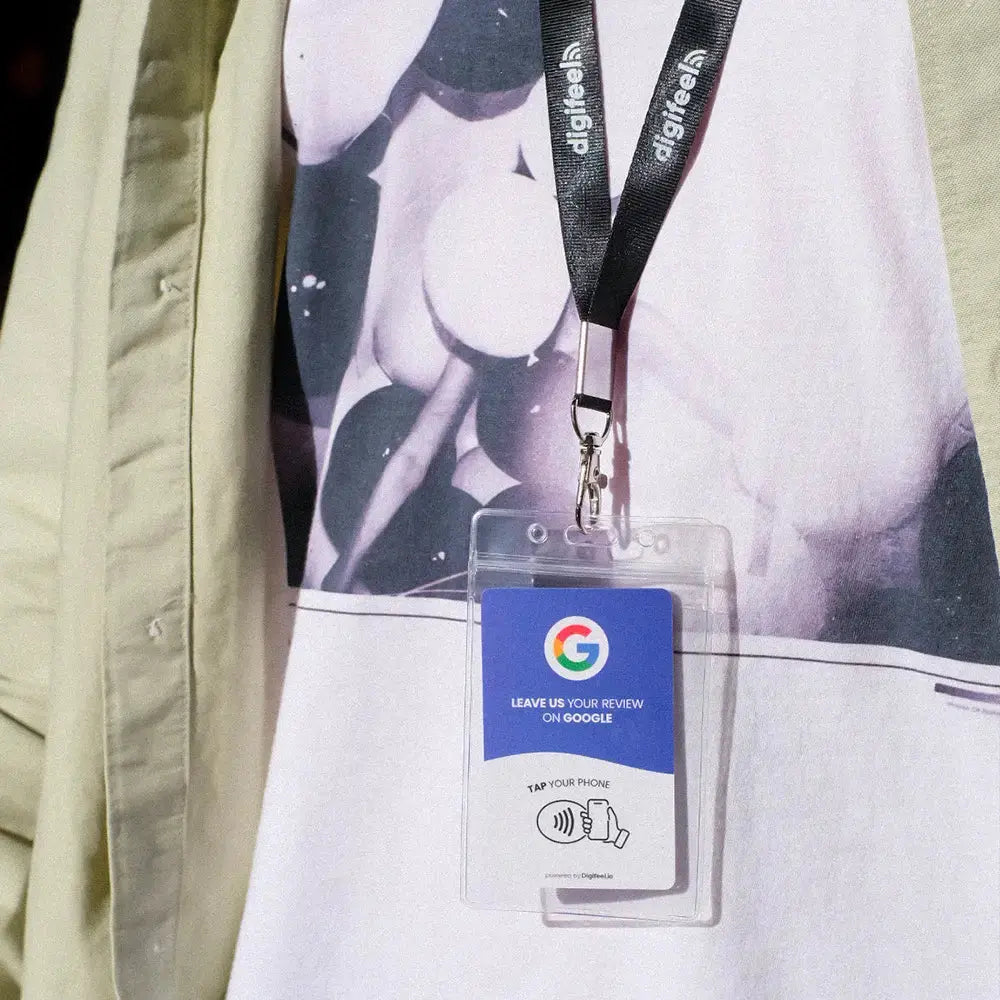
The Digifeel NFC Google Review Card reduces the entire review submission process to a single tap from your customer at the peak moment of their satisfaction. No searching, no navigating, no form to find the review page opens instantly, the motivation is still alive, and the conversion from tap to published review happens in under thirty seconds. The technology works on every iPhone from the iPhone 7 onwards and virtually every Android device released in the last six years covering over 95% of the smartphones your customers carry with zero setup required on the customer's end.
Businesses that integrate the Digifeel card into their standard customer farewell routine consistently report collecting fifteen to thirty new reviews per month compared to two to five through passive or inconsistent methods. The card arrives pre-configured, activates in twenty seconds, and works permanently from that moment without any ongoing maintenance or technical management required.
Train Your Team to Make the Request Consistently
The Digifeel card does its job perfectly every single time a customer taps it. The variable that determines how many reviews your business collects is how consistently your team presents it. Building a team culture where the review request is a non-negotiable standard in every positive customer farewell rather than an optional individual initiative is the management discipline that separates businesses collecting two reviews per month from those collecting twenty.
Brief your team on why reviews matter in concrete terms local search ranking, new customer acquisition, revenue growth. Role-play the interaction until the phrasing feels natural and the timing feels instinctive. Make the weekly review count visible to the whole team. And celebrate milestone moments publicly because social accountability drives consistency more reliably than any instruction or incentive.
Respond to Every Review Within 24 Hours
Responding to reviews positive and negative is one of the most underutilized levers for improving both your review volume and your local search ranking simultaneously. Google rewards active response behavior with improved local search visibility, and potential customers reading your profile evaluate your responses as closely as they read the reviews themselves.
For positive reviews, a warm, specific response that thanks the reviewer by name takes thirty seconds and builds genuine customer loyalty that drives repeat visits and referrals. For negative reviews, a calm, professional, solution-oriented response transforms a potentially damaging piece of content into public evidence of your commitment to customer experience which is often more persuasive to prospective customers than a perfect star rating.
Create a Direct Google Review Link for Digital Touchpoints
For businesses with digital customer touchpoints email newsletters, post-purchase confirmation emails, SMS sequences, or social media a direct Google review link reduces the friction of the digital review request to a single tap on a clearly labeled button. Generate your direct review link through your Google Business Profile dashboard and embed it prominently in every digital communication that follows a positive customer interaction.
While digital review requests consistently underperform in-person NFC collection in conversion rate terms because they arrive after the emotional peak has passed they add a meaningful secondary collection stream that captures customers who missed the in-person request and are reminded of their intention to leave a review through a timely, frictionless digital prompt.
How Many Google Reviews Does Your Business Actually Need?
This is one of the most common questions local business owners ask when they start taking their Google review strategy seriously and the honest answer is that there is no universal number that applies to every business in every market. The right target for your review count is not an absolute figure. It is a relative one, defined entirely by the competitive landscape you are operating in.
The most useful starting point is a direct competitive audit. Search your primary service keywords on Google, identify the businesses consistently appearing in the local pack above your listing, and look at their review profiles. How many reviews do they have? What is their average star rating? How recently were their most recent reviews published? These numbers are your real benchmar not an arbitrary target someone suggested in a marketing article.
If the businesses outranking you average 150 reviews and you have 40, closing that gap is your strategic priority. If they average 300 reviews and you have 25, the gap is larger but the path to closing it is the same consistent, disciplined review collection through tools like the Digifeel NFC Google Review Card that generate the ongoing volume needed to move the needle meaningfully over weeks and months rather than years.
Beyond the competitive benchmark, review recency matters as much as total volume in how Google evaluates your profile's authority and relevance. A business with 200 reviews collected over five years and no recent activity is sending a very different signal to Google's algorithm than one with 80 reviews collected consistently over the last twelve months. Google weights fresh reviews significantly in its local search ranking calculations which means that ongoing collection is more valuable than a historical stockpile, and that a business actively collecting five to ten new reviews per month will consistently outrank a competitor with more total reviews but stagnant recent activity.
From a conversion perspective the rate at which profile visitors become actual customers the research consistently shows that the credibility threshold sits around 50 reviews for most local business categories. Below that number, potential customers may question whether the review sample is representative. Above it, the profile feels established and trustworthy enough to support confident purchasing decisions. The sweet spot for both ranking and conversion sits between 100 and 200 reviews for most competitive local markets with ongoing monthly collection maintaining the recency signal that keeps the ranking elevated over time.
The practical implication is straightforward: stop looking for a magic number and start closing the gap between where your profile is today and where your highest-ranking competitors already are. That gap is your target and the Digifeel card is the fastest legitimate tool available to close it.
FAQ about: How Do I Get Google Reviews for My Business
Is it legal to ask customers for Google reviews?
Yes asking customers for Google reviews is entirely legal and explicitly permitted by Google's own guidelines. What Google prohibits is incentivizing reviews with discounts, gifts, or any form of compensation, and explicitly requesting only positive reviews. A genuine, warm request asking a customer to share their experience is fully compliant with Google's policies and is the foundation of every effective review collection strategy.
What is the fastest way to get more Google reviews?
The fastest method for physical businesses is the Digifeel NFC Google Review Card which eliminates the friction between a satisfied customer and a published review by reducing the entire process to a single tap at the peak moment of their experience. Businesses that integrate the card into their standard customer farewell routine consistently report collecting fifteen to thirty new reviews per month compared to two to five through passive or inconsistent methods.
How do I get a direct Google review link for my business?
Log into your Google Business Profile at business.google.com, navigate to your dashboard, and look for the "Get more reviews" or "Share review form" option within your profile settings. Copy the direct link provided and use it in follow-up emails, SMS messages, social media posts, and any other digital customer touchpoints where a frictionless review request is appropriate.
When is the best moment to ask a customer for a Google review?
The peak moment for a review request is immediately after the highest point of customer satisfaction in their interaction with your business before the emotional motivation has had any chance to fade. For a restaurant, that is when the last dish is cleared. For a salon, it is the second the client sees their result in the mirror. For a retail store, it is the completion of a purchase the customer is visibly excited about. Timing the request to this specific moment is the single most impactful variable in your review collection conversion rate.
Do Google reviews help my local search ranking?
Yes significantly. Review volume, review recency, average star rating, and response rate are all directly weighted factors in Google's local search ranking algorithm. A business that consistently collects fresh reviews and responds to them promptly will consistently outrank a competitor with equivalent or superior services but a weaker, less active review profile.
How many Google reviews do I need to rank well locally?
There is no universal number the right target is defined by your competitive landscape. Identify the businesses ranking above you in local search for your target keywords and match or exceed their review volume and recency. As a general benchmark, 50 reviews represents a credibility threshold for most consumers, and 100 to 200 recent reviews is the sweet spot for strong local search visibility in most competitive markets.
What should I do if customers say they will leave a review but never do?
This is the most common review collection challenge for local businesses and it is almost always a friction problem rather than a motivation problem. Customers who say they will leave a review genuinely mean it in the moment. The issue is that the process of following through requires enough effort to outlast the motivation by the time they get home. The solution is capturing the review in the moment, before the motivation fades, using a tool like the Digifeel NFC Google Review Card that makes the entire submission process a single tap.
Can I respond to Google reviews from my smartphone?
Yes. The Google Business Profile app for iOS and Android gives you full review management access from your smartphone including the ability to read new reviews, respond to them directly, and monitor your overall review activity in real time. Enabling push notifications through the app ensures you are alerted immediately when a new review is published, allowing you to respond promptly and maintain the active profile management that Google rewards with improved local search visibility.
How do I handle negative Google reviews?
Respond to every negative review calmly, professionally, and constructively acknowledging the concern without becoming defensive and offering a clear path to resolution. A well-crafted response to a negative review does something deletion never could: it demonstrates your commitment to customer experience publicly, to every potential customer reading your profile. If you believe a negative review violates Google's content policies fake content, offensive language, personal information you can flag it for removal through your Google Business Profile dashboard.
Does the Digifeel NFC card work on all smartphones?
Every iPhone from the iPhone 7 onwards and virtually every Android device released in the last six years supports NFC natively covering over 95% of the smartphones your customers carry in 2026. No app download, no settings change, and no special configuration is required on the customer's device. For the small percentage of customers whose devices do not support NFC, the Digifeel card also includes a QR code as a reliable backup path to your Google review page.
How long does it take to see results after implementing a review collection strategy?
Most businesses using a consistent, tool-supported collection strategy begin to see visible results within the first week of implementation. Review volume increases immediately as the Digifeel card captures reviews that would previously have been lost to friction. Rating improvements become visible within two to four weeks as the volume of new five-star reviews begins moving the weighted average upward. Local search ranking improvements typically follow within four to eight weeks as Google's algorithm registers the increased review activity and recency signals from your profile.