You already know that Google reviews matter. You have seen competitors with hundreds of five-star ratings ranking above you in local search results. You have watched potential customers choose another business simply because their review profile looked more trustworthy than yours. And you have felt the frustration of delivering a genuinely great experience to customer after customer only to watch your review count grow by one or two per month while your competitors pull further ahead.
The problem is not your business. The problem is your review collection process or more accurately, the absence of one.
The uncomfortable truth about Google review collection in 2026 is that satisfied customers almost never leave reviews spontaneously. Not because they do not want to. Not because they did not enjoy their experience. But because the gap between the intention to leave a review and the act of actually submitting one is wide enough for that intention to dissolve completely before it ever becomes action. Life moves fast. The motivation fades. The process feels like too much effort. And the review never gets written.
The businesses collecting the most Google reviews in 2026 are not doing so because they have more satisfied customers than you. They are doing so because they have built a systematic, friction-free review collection process that captures the review in the moment when the customer is still present, still satisfied, and still motivated to share their experience.
In this guide, we break down the most effective strategies for getting more Google reviews for your local business in 2026 from the tools and timing that maximize conversion rates to the team habits and response practices that build a review profile your competitors simply cannot ignore.
Why Most Local Businesses Struggle to Collect Google Reviews?
Understanding why review collection fails for most local businesses is the essential first step toward building a strategy that actually works. The struggle is not random it follows predictable patterns rooted in the same fundamental causes that affect businesses across every category and every market. Here is a precise breakdown of the most common reasons local businesses consistently underperform on review collection and why each one matters more than most owners realize.
The Friction Problem Is Bigger Than It Looks
The single most pervasive reason local businesses fail to collect reviews at the rate their customer satisfaction levels would suggest is possible is friction — the cumulative effort required to go from a positive experience to a published review. Most business owners underestimate how much friction exists in their current review collection process because they are evaluating it from the perspective of someone who is already motivated to fix the problem. Their customers are evaluating it from the perspective of someone who has just finished an interaction, is mentally transitioning to their next task, and has approximately thirty seconds of available motivation before the intention fades entirely.
Every additional step in the review submission process opening a browser, searching for the business name, finding the correct listing, navigating to the review form, selecting a star rating, writing feedback, and submitting is a friction point that reduces the probability of completion. Combined, these steps represent enough cumulative effort to kill the conversion for the majority of customers who genuinely intended to leave a review when they walked out the door.
The Timing Is Almost Always Wrong
Most businesses that do attempt to collect reviews make their request at the wrong moment either too early in the customer interaction before the experience has reached its emotional peak, or too late after the customer has already mentally disengaged from the experience and begun thinking about whatever comes next.
The peak window for review collection is narrow, specific, and different for every business type. A restaurant customer is most receptive immediately after finishing their meal, not while paying the bill. A salon client is most motivated the second they see their result in the mirror, not as they are putting on their coat. Missing this window by even a few minutes means making the request after the emotional motivation has already begun to fade and a faded motivation combined with a friction-heavy process produces a predictably low conversion rate.
There Is No Consistent Team Process
Review collection that depends on individual team members remembering to make the request when they feel like it is not a review collection strategy. It is an occasional coincidence. The businesses that collect reviews consistently are those that have embedded the request into a standard, non-negotiable step in their customer farewell process something that happens the same way, at the same moment, in every positive customer interaction regardless of which team member is handling it.
Without this consistency, review collection is subject to the natural variability of individual behavior some team members ask enthusiastically, others feel awkward and skip it, and the overall collection rate reflects the lowest common denominator of team motivation rather than the potential that a systematic approach would deliver.
The Follow-Up Methods Are Broken
Email review requests, SMS follow-ups, and printed QR codes the most commonly used review collection methods outside of in-person requests all share the same fundamental weakness: they ask the customer to act after the emotional peak of their experience has already passed. By the time a follow-up email arrives, the satisfaction that would have motivated an enthusiastic review has been diluted by everything that happened in between. The link gets ignored, the QR code never gets scanned, and the review never gets written not because the customer had a bad experience, but because the method arrived too late to capture the motivation that existed at the right moment.
The Most Effective Ways to Get More Google Reviews in 2026
Knowing why review collection fails is valuable context. Having a clear, ranked list of the methods that actually work and understanding precisely why each one outperforms the alternatives is what allows you to build a review collection strategy that delivers consistent, compounding results. Here is a complete breakdown of the most effective approaches available to local businesses in 2026.
| Method | Effectiveness | Friction Level | Best For |
|---|---|---|---|
| NFC Google Review Card | Very High | Zero | All physical businesses |
| Direct verbal request | High | Low | Service businesses with strong rapport |
| QR code at point of sale | Medium | Moderate | Retail and hospitality |
| SMS follow-up | Medium | Moderate | Appointment-based businesses |
| Email follow-up | Low/Medium | High | High-volume transactional businesses |
| Review link on receipt | Low | High | Retail and food service |
| Social media request | Low | Very High | Online-first businesses |
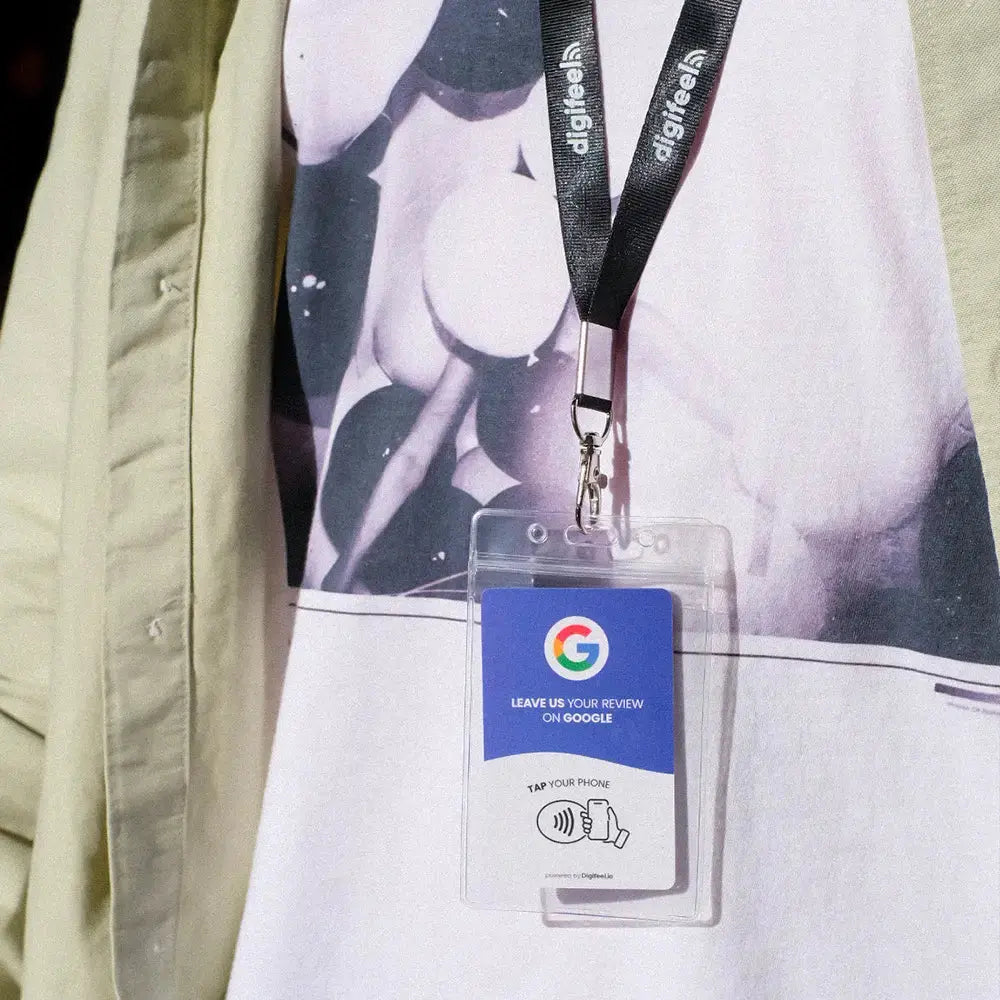
The NFC Google Review Card is the highest-converting review collection method available to physical businesses and by a meaningful margin. The Digifeel NFC Google Review Card reduces the entire review submission process to a single tap from your customer at the peak moment of their satisfaction. No searching, no navigating, no form to find. The review page opens instantly, the motivation is still alive, and the conversion from tap to published review happens in under thirty seconds. Businesses that integrate the Digifeel card into their standard customer farewell routine consistently report collecting fifteen to thirty new reviews per month compared to two to five through passive methods — a difference that compounds into a dramatically stronger review profile within weeks of adoption.
A direct, warm verbal request remains one of the highest-converting methods available when it is made at precisely the right moment by a team member who has built genuine rapport with the customer. The key variables are timing immediately after the emotional peak of the experience and phrasing genuine, personal, and low-pressure rather than scripted and transactional. A verbal request without a frictionless follow-through mechanism like a Digifeel card consistently underperforms, because it asks the customer to remember and act independently rather than providing an immediate, effortless path to completion.
QR codes at the point of sale represent a moderate-effectiveness option that works best when positioned visibly at checkout counters, restaurant tables, or service desks. They require the customer to open their camera app, scan the code, and navigate to the review form — a multi-step process that introduces enough friction to reduce conversion rates significantly compared to NFC. QR codes work better as a passive backup option alongside active NFC collection than as a primary review collection strategy.
SMS follow-up messages have higher open rates than email and arrive more quickly after the customer interaction, making them a more effective follow-up channel for appointment-based businesses like salons, clinics, and service providers. The challenge is that even a well-timed SMS arrives after the emotional peak of the experience and the link still requires the customer to navigate to the review form independently rather than tapping a card in the moment.
Email follow-up sequences remain widely used but consistently deliver the lowest conversion rates of any active review collection method — primarily because of the combination of delayed delivery, high inbox competition, and the multi-step navigation required to reach the review submission form. They have a role in high-volume transactional businesses where in-person collection is impractical, but should never be the primary review collection strategy for a business with regular face-to-face customer interactions.
The overarching principle that this data reinforces is straightforward: the methods that capture the review in the moment, at the peak of customer satisfaction, with the least friction, consistently outperform every alternative. Building your review collection strategy around that principle with the Digifeel NFC Google Review Card as the primary tool and verbal requests as the consistent team habit is the approach that delivers the fastest, most sustainable improvement in review volume and overall Google rating for any local business in 2026.
FAQ: How to Get More Google Reviews for My Local Business
Why are Google reviews important for my local business?
Google reviews are one of the most heavily weighted factors in Google's local search ranking algorithm directly influencing how prominently your business appears in local search results, Google Maps, and the local pack. Beyond ranking, reviews are the primary trust signal that potential customers use to evaluate your business before making a contact or purchase decision. A strong, actively growing review profile drives more new customer acquisition, at a lower cost, than almost any other local marketing investment available to a small business in 2026.
How many Google reviews does my business need?
There is no magic number but context matters significantly. What matters most is how your review volume compares to the competitors appearing above you in local search results for your target keywords. If your nearest competitors average 150 reviews and you have 30, closing that gap is a strategic priority. As a general benchmark, businesses with more than 100 recent, high-quality reviews consistently outperform those with fewer in both local search visibility and customer conversion rate.
What is the fastest way to get more Google reviews?
The fastest method for physical businesses is the Digifeel NFC Google Review Card which eliminates the friction between a satisfied customer and a published review by reducing the entire process to a single tap at the peak moment of their experience. Businesses that integrate the card into their standard customer farewell routine consistently report collecting fifteen to thirty new reviews per month compared to two to five through passive or inconsistent methods.
Can I ask customers to leave a Google review?
Yes Google explicitly allows businesses to ask customers for reviews. What Google prohibits is incentivizing reviews with discounts, gifts, or any other form of compensation, and explicitly asking for only positive reviews. A genuine, warm request asking a customer to share their experience is entirely within Google's guidelines and is the foundation of every effective review collection strategy.
Can I offer a discount or incentive in exchange for a Google review?
No. Google's review policies explicitly prohibit incentivizing reviews in any form including discounts, free products, loyalty points, or any other compensation offered in exchange for feedback. Reviews collected through incentivization violate Google's terms of service and risk having those reviews removed, or in severe cases, having your entire profile penalized. The most effective review collection strategies are built on genuine customer satisfaction and frictionless collection tools, not incentives.
What should I do if customers say they want to leave a review but never do?
This is the most common review collection challenge for local businesses and it is almost always a friction problem rather than a motivation problem. Customers who say they will leave a review genuinely mean it in the moment. The issue is that the process of following through requires enough effort to outlast the motivation by the time they get home. The solution is capturing the review in the moment, before the motivation fades, using a tool like the Digifeel NFC Google Review Card that makes the entire submission process a single tap.
How do I respond to Google reviews effectively?
Respond to every review positive and negative within 24 hours. For positive reviews, a warm, specific response that thanks the reviewer by name and references something genuine about their feedback takes thirty seconds and builds meaningful customer loyalty. For negative reviews, a calm, professional, solution-oriented response that acknowledges the concern without becoming defensive demonstrates the kind of customer care that converts skeptical profile visitors into bookings. Google rewards active response behavior with improved local search visibility making response rate a ranking signal as well as a trust signal.
Does the number of Google reviews affect my local search ranking?
Yes review volume is one of the most heavily weighted factors in Google's local search ranking algorithm alongside review recency, average star rating, and response rate. A business that consistently collects new reviews will outrank a competitor with a higher average rating but stagnant review activity, because Google interprets ongoing review collection as a signal of a currently active, popular, and trustworthy business worth surfacing prominently to local searchers.
How do I get Google reviews without annoying my customers?
The key is timing and framing. A review request made at the right moment immediately after the peak of a positive customer experience never feels annoying because it arrives when the customer's motivation to share their experience is naturally highest. A request framed as a genuine expression of appreciation rather than a corporate collection task feels personal and warm rather than transactional. The Digifeel NFC Google Review Card supports both of these principles by making the tap feel like a natural, effortless extension of a positive farewell interaction rather than an additional obligation imposed on the customer.
What is the best way to collect Google reviews for a service-area business?
For service-area businesses that operate at customer locations plumbers, cleaners, personal trainers, mobile beauticians the review request should be made at the conclusion of the service when the customer can see the result and satisfaction is at its peak. A Digifeel NFC Google Review Card carried by the service professional and presented during the farewell interaction works identically in a customer's home or office as it does in a fixed business location delivering the same single-tap, zero-friction review submission experience regardless of where the service was delivered.