A restaurant lives and dies by its reputation. Before a customer books a table, calls to check availability, or walks through your door for the first time, they do one thing almost without exception: they check your Google reviews.
In 2026, your Google rating is not just a reflection of your food and service. It is the single most visible trust signal attached to your restaurant's name in local search results, on Google Maps, and in the mind of every potential diner comparing their options on a Friday night. A restaurant with 400 recent five-star reviews and a 4.8 rating does not just look more appealing than a competitor with 30 reviews and a 4.1. It ranks higher in local search, appears more prominently on Google Maps, and converts significantly more profile visitors into actual reservations.
The challenge every restaurant owner faces is the same: your customers enjoy their meal, leave satisfied, and fully intend to leave a review and then life gets in the way. The intention fades on the drive home. The follow-up email goes unread. The QR code on the table never gets scanned. And that five-star review that could have strengthened your reputation and attracted your next ten customers never gets written.
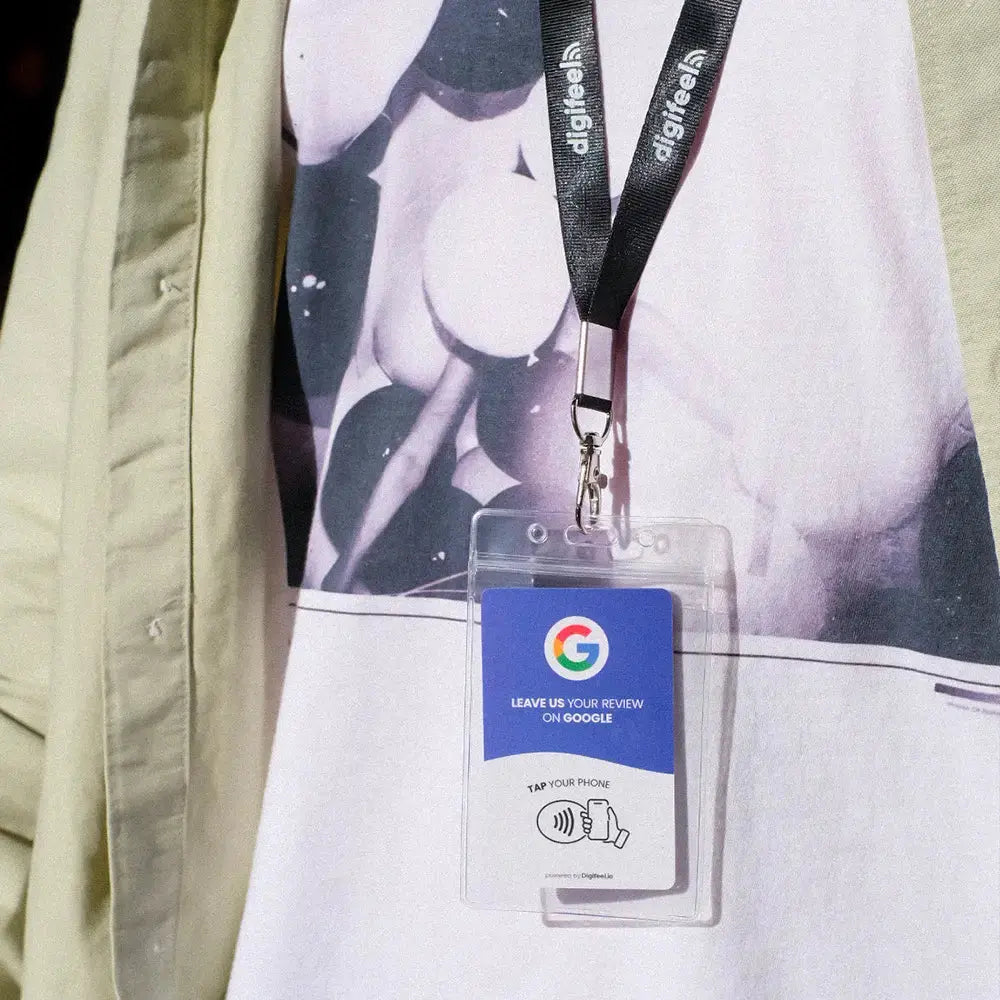
The NFC Google Review Card solves this problem at its root. By reducing the entire review submission process to a single tap, presented by your team at the peak moment of dining satisfaction before the customer has mentally left the experience, it transforms review collection from a frustrating, hit-or-miss process into a consistent, predictable, and scalable part of your restaurant's daily operation.
At Digifeel, we have helped restaurants of every size, from independent neighborhood bistros to global quick service brands like Burger King, build the kind of Google review profile that dominates local search and drives a consistent flow of new diners through the door. This guide covers everything you need to know about using a Google Review Card in a restaurant environment, from setup and placement strategy to team training and the results you can realistically expect.
Why Google Reviews Are Critical for Restaurant Success in 2026?
The restaurant industry has always been driven by word of mouth. But in 2026, word of mouth has moved almost entirely online and Google reviews are where that conversation happens at the scale and visibility that actually moves the needle for your business. Understanding exactly why reviews are so critical for restaurant success today goes well beyond the obvious observation that customers read them before choosing where to eat.
Google Reviews Directly Determine Your Local Search Visibility
When a potential diner searches "best Italian restaurant near me" or "brunch spots open Sunday," Google does not simply list every restaurant in the area. It ranks them and review volume, review recency, average star rating, and response rate are among the most heavily weighted factors in that ranking calculation. A restaurant with a strong, actively growing review profile consistently appears higher in local search results and more prominently on Google Maps than competitors with better food, better locations, and larger marketing budgets who have neglected their review strategy.
In practical terms, this means that your Google review profile is your most powerful and most cost-effective local marketing tool. Every new five-star review is a signal to Google that your restaurant is active, popular, and worth surfacing to local diners and that signal compounds over time into a ranking advantage that paid advertising cannot replicate.
Reviews Are the First Thing Diners See Before Choosing a Restaurant
The modern dining decision journey is remarkably consistent. A potential customer identifies a few restaurant options through Google Search or Google Maps, looks at the photos, and then checks the reviews before making a final decision. In most cases, this entire process happens on a smartphone in under two minutes and the restaurant with the strongest review profile wins the reservation before the customer has ever read a menu or visited a website.
What this means for restaurant owners is that your Google review profile is doing sales work around the clock, on every device, for every potential customer in your area who is deciding where to eat. A compelling review profile with hundreds of recent, specific, enthusiastic reviews converts that consideration into a booking more reliably than any other marketing asset you own.
The Volume and Recency of Your Reviews Signal Restaurant Quality
Diners are sophisticated consumers of review content. A restaurant with 500 reviews accumulated over five years feels meaningfully different from one collecting 50 new reviews every month. The latter signals a currently popular, actively appreciated dining destination. The former signals a business that may have been good once but is no longer generating the kind of enthusiasm that motivates customers to share their experience publicly.
Review recency is a trust signal that influences diner perception just as directly as it influences Google's ranking algorithm. A steady stream of fresh, enthusiastic reviews tells potential customers that your restaurant is consistently delivering experiences worth talking about right now not just historically. This perception of current excellence is one of the most powerful conversion drivers available to any restaurant competing in a crowded local market.
Responding to Reviews Builds the Trust That Fills Tables
The way a restaurant responds to its Google reviews is visible to every potential customer reading the profile and it communicates something important about the culture and values of the business before a single dish has been served. Restaurants that respond to every review, positive and negative, with genuine warmth and professionalism signal that they care about every customer's experience in a way that resonates deeply with diners who are deciding whether to trust a new restaurant with their time and money.
How to Use a Google Review Card in Your Restaurant?
Understanding the value of Google reviews for your restaurant is one thing. Having a clear, practical system for collecting them consistently from every satisfied diner who walks through your door is another. Here is exactly how to integrate a Digifeel NFC Google Review Card into your restaurant's daily operation in a way that maximizes collection rates without ever feeling pushy, scripted, or forced.
The foundation of an effective restaurant review collection strategy is timing. In a dining context, the peak moment of customer satisfaction does not happen when the food arrives, when the check is presented, or when the customer stands up to leave. It happens in the window immediately after a genuinely positive dining experience reaches its natural conclusion when the meal is finished, the atmosphere has been enjoyed, and the customer is in a warm, satisfied state of mind before the cognitive transition to "what comes next" has begun. That window is narrow, and presenting your Digifeel card within it is the single most impactful variable in your review collection rate.
The most natural and consistently effective moment in a restaurant setting is when your server or host returns the check or processes the payment. The interaction is already happening, the customer is already engaged, and the transition out of the experience has not yet fully occurred. A warm, brief, and genuine request at this precise moment "We really appreciate your visit tonight, it would mean a lot to us if you could share your experience, just tap here with your phone" converts at a significantly higher rate than any other timing or phrasing combination because it aligns perfectly with the customer's emotional state and the natural rhythm of the dining interaction.
For restaurants with high table turnover, the Digifeel card should be treated as a standard closing tool in every positive table interaction rather than an optional add-on that servers deploy at their own discretion. The difference between a restaurant collecting 5 reviews per week and one collecting 30 is almost never the quality of the dining experience. It is the consistency with which the team presents the card at the right moment, to every table, without exception. Building this consistency requires brief but clear team training that explains not just how to use the card but why review collection matters directly to the restaurant's visibility, reputation, and ultimately its revenue.
Card placement within the restaurant environment should complement active team presentation rather than replace it. A Digifeel card positioned visibly at the host stand, on the bar, or as part of a small branded display at each table creates passive collection opportunities from proactive customers who notice it and tap spontaneously. These passive taps add a meaningful secondary collection stream on top of the primary active presentation by your team, and they require zero additional effort once the card is positioned correctly.
For restaurants with multiple service areas a main dining room, a private dining space, a bar, a terrace consider having a Digifeel card accessible in each zone so that the collection opportunity is available regardless of where the customer's experience concludes. A bar customer who has enjoyed a great evening of drinks and conversation is just as valuable a review source as a diner who spent three hours at a table, and having the card present at the bar ensures that experience gets captured too.
Finally, the language your team uses matters enormously in a restaurant context where the relationship between server and diner is personal and emotionally resonant. The most effective phrasing is always warm, specific, and brief referencing something genuine about the interaction where possible, keeping the time commitment realistic, and making the tap feel like a natural expression of appreciation rather than a corporate review collection task.
Where to Place Your Google Review Card in a Restaurant for Maximum Results?
Placement strategy is one of the most underestimated variables in restaurant review collection. The same Digifeel NFC card presented at the right location and the right moment in the customer journey will consistently outperform an identical card positioned poorly simply because proximity to the peak satisfaction moment determines how naturally and effortlessly the tap happens. Here is a precise breakdown of the highest-converting placement locations in a restaurant environment and why each one works.
The payment interaction point is the single highest-converting placement in any restaurant setting. Whether your team returns a card machine, a check presenter, or a receipt to the table, this moment represents the natural conclusion of the dining experience and the final touchpoint between your staff and the customer before they leave. Presenting the Digifeel card as part of this interaction either placed inside the check presenter, held in the server's hand alongside the payment terminal, or positioned on a small branded stand at the table puts the review request at precisely the moment when satisfaction is highest and the customer is still fully present and engaged with your team.
The host stand or reception desk captures customers at departure. For restaurants where the host or front-of-house manager farewells departing guests, having a Digifeel card visible and accessible at the host stand creates both an active presentation opportunity and a passive tap opportunity for customers who notice it as they collect their coats and say goodbye. This placement works particularly well in fine dining environments where the host farewell is a meaningful part of the overall experience and the relationship between staff and guest is warm enough to make a review request feel natural rather than transactional.
The bar is an often-overlooked high-value placement zone. Bar customers frequently have longer, more relaxed interactions with staff than table diners, and the personal connection that develops over an evening of conversation creates a strong foundation for a genuine review request. A Digifeel card positioned visibly on the bar top or presented by the bartender at the end of a customer's visit captures a segment of your audience that a table-only strategy consistently misses.
Table displays work as passive collection tools that complement active presentation. A small branded card holder at each table with the Digifeel card visible and accessible allows proactively minded customers to tap without waiting for a staff member to present the card. This passive placement does not replace the higher-converting active presentation by your team, but it adds a meaningful secondary collection stream that requires no ongoing effort once the cards are positioned. In busier periods when servers are managing multiple tables simultaneously, table placement ensures the review opportunity is never missed simply because a staff member did not have the right moment to make the request.
Private dining rooms and event spaces deserve dedicated card placement. Groups celebrating birthdays, anniversaries, corporate dinners, and other special occasions are among the most emotionally engaged and review-motivated customers in your entire restaurant. The combination of a memorable occasion, high spend, and strong emotional resonance creates ideal conditions for enthusiastic five-star reviews. Having a Digifeel card presented by the event coordinator or placed prominently in the private dining space at the conclusion of the event captures this high-value segment reliably.
The takeaway and delivery interaction is a placement opportunity that most restaurants ignore entirely. For customers collecting takeaway orders, the moment of handover is brief but can be warm and positive enough to support a review request. A Digifeel card at the takeaway counter or included in a delivery package with a brief personal note asking for feedback extends your review collection strategy beyond the dine-in experience and into every customer interaction your restaurant generates throughout the day.