In healthcare, trust is not just a marketing advantage it is the foundation of every patient relationship. Before a new patient books an appointment with a dentist, a general practitioner, or any medical specialist, they do something that has become as instinctive as checking the weather: they read your Google reviews.
The stakes in medical service selection are higher than in almost any other consumer category. A patient choosing a dentist is not just spending money they are entrusting someone with their physical health, their comfort, and in many cases their anxiety. The decision carries real emotional weight, and Google reviews are the primary tool modern patients use to evaluate whether a practice deserves that trust before they ever pick up the phone to book.
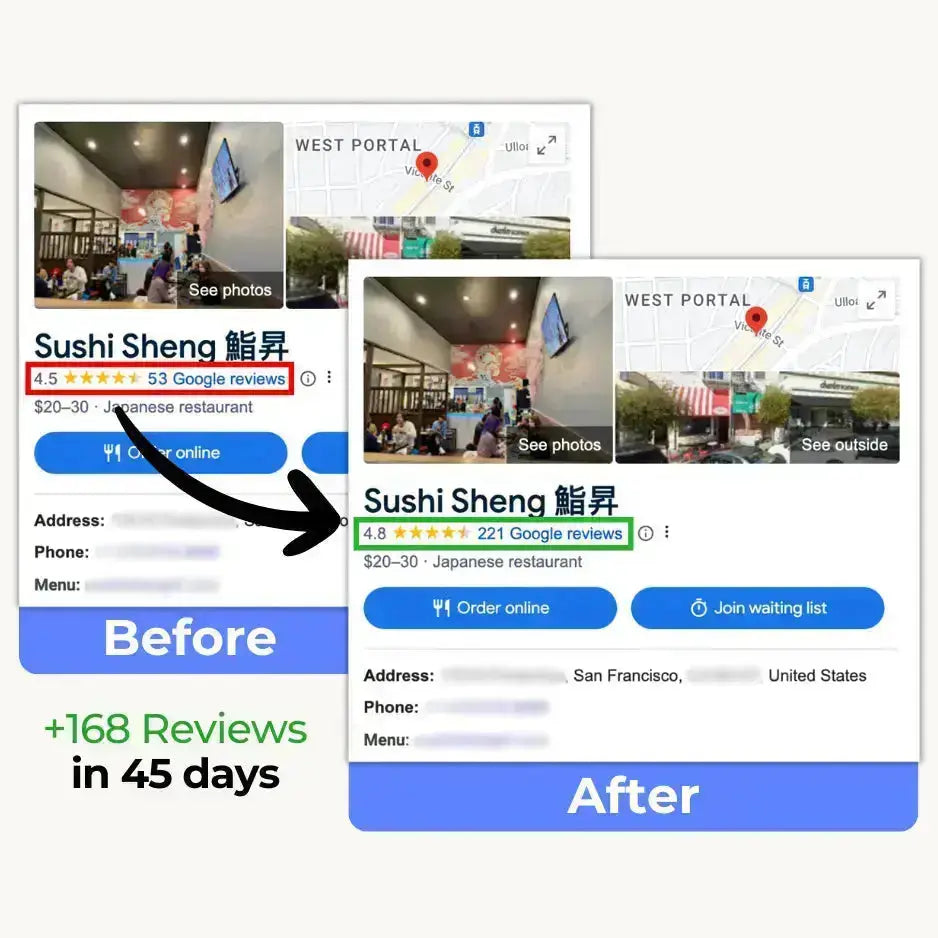
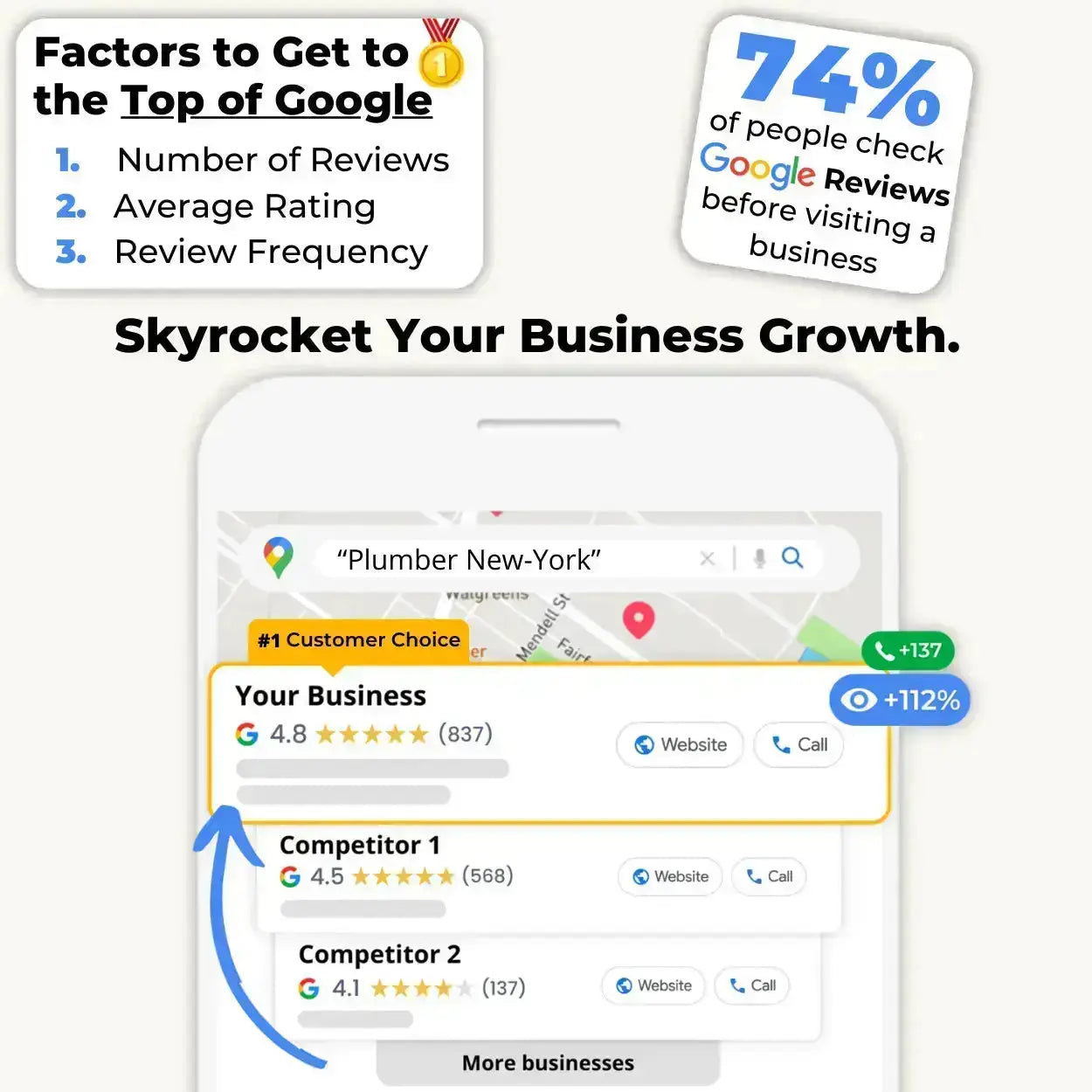
A dental practice or medical clinic with 200 recent five-star reviews and a 4.9 rating does not just look more credible than a competitor with 25 reviews and a 4.3. It ranks higher in local search results, appears more prominently on Google Maps, and converts significantly more profile visitors into booked appointments simply because the weight of patient testimony signals a level of trustworthiness that no website, no advertisement, and no professional accreditation can communicate as directly or as persuasively.
Yet despite delivering exceptional care to patients every single day, most medical practices collect reviews at a fraction of the rate their patient satisfaction levels would suggest is possible. Not because patients are unwilling but because the friction between a positive appointment and a published review is high enough to kill the intention before it ever becomes action.
The Digifeel NFC Google Review Card eliminates that friction entirely. One tap from a satisfied patient at the right moment, and they are on your Google review page before the motivation has had any chance to fade.
In this guide, we cover everything dental practices and medical clinics need to know about using a Google Review Card effectively, from setup and placement to patient communication and the results you can realistically expect in 2026.
Why Google Reviews Matter More for Medical Practices Than Any Other Business Type?
The relationship between Google reviews and business success exists across virtually every local business category. But in the medical and dental space, that relationship operates with a particular intensity that sets healthcare practices apart from almost every other type of business competing for local search visibility and patient trust.
The trust threshold for healthcare decisions is uniquely high. When a consumer chooses a restaurant and the experience disappoints, the consequence is a forgettable meal. When a patient chooses a dentist or a doctor and the experience falls short of expectations, the consequences can feel significantly more serious both physically and emotionally. This elevated stakes environment means that patients approach the decision of which practice to trust with a level of research intensity and risk aversion that simply does not exist in most other service categories. Google reviews are the primary tool they use to manage that risk, and the weight they place on review content when making healthcare decisions is correspondingly higher than in almost any other context.
New patient acquisition in the medical space is almost entirely review-driven. Unlike retail or hospitality, where impulse decisions and location convenience play significant roles in customer acquisition, patients choosing a new dentist or medical specialist rarely make their decision based on anything other than reputation and proximity. When proximity is equal between two practices, reputation wins every time — and in 2026, reputation is measured primarily through Google reviews. A practice with a compelling review profile consistently acquires new patients at a lower cost and higher volume than one with equivalent clinical quality but a weaker online presence.
Local search dominance in the healthcare category delivers compounding returns that are particularly powerful given the high lifetime value of a loyal patient. A patient who finds your practice through Google, books their first appointment based on your review profile, and has a positive experience becomes a long-term relationship worth thousands of dollars in lifetime revenue — plus the referrals to family members and colleagues that characterize loyal healthcare patients more than almost any other consumer segment. Every five-star review that attracts one new loyal patient generates a return that compounds for years beyond the initial acquisition.
The E-E-A-T framework that Google uses to evaluate healthcare content Experience, Expertise, Authoritativeness, and Trustworthiness makes review signals particularly important for medical practices in local search. Google applies heightened scrutiny to healthcare-related search results because the stakes of poor information or untrustworthy recommendations are higher in this category than in most others. A strong, active, well-responded review profile signals exactly the kind of trustworthiness and patient satisfaction that Google's algorithm rewards with improved local search visibility in the medical category.
Patient anxiety is a conversion variable that reviews address more effectively than any other marketing tool. Dental anxiety in particular affects a significant percentage of the adult population, and patients who are anxious about treatment actively seek reassurance before booking. A review profile full of comments about gentle care, patient communication, and anxiety management transforms a hesitant potential patient into a booked appointment more reliably than any promotional offer or professional credential displayed on a practice website. In healthcare, empathetic, specific patient reviews are the most powerful conversion tool available and collecting them consistently is the highest-leverage marketing investment a practice can make.
How to Collect Patient Reviews Without Compromising Privacy or Professionalism?
Review collection in a medical or dental environment requires a more thoughtful approach than in most other business categories. The combination of patient privacy regulations, the sensitive nature of healthcare interactions, and the professional standards that govern how medical practices communicate with patients means that the review request process needs to be handled with care, discretion, and a clear understanding of what is appropriate in a clinical context.
Patient privacy is the non-negotiable starting point. When asking a patient for a Google review, the request should never reference the specific nature of their treatment, their medical history, or any detail of their appointment that the patient has not already chosen to make public. The review request is simply an invitation to share their experience of the practice the care, the communication, the comfort, and the overall quality of their visit not an invitation to disclose clinical details. A Digifeel NFC Google Review Card handles this naturally because the tap simply opens the Google review page. There is no pre-filled content, no prompted disclosure, and no clinical framing. The patient decides entirely what they want to share, which keeps the process both privacy-compliant and genuinely patient-led.
The framing of the review request matters enormously in a healthcare context. Patients are accustomed to being asked about their health and their treatment in clinical settings, and a review request that feels clinical or procedural will generate a very different response than one that feels warm, genuine, and personal. The most effective approach is a brief, human expression of appreciation "It was lovely to see you today, we really appreciate your support, it would mean a great deal to us if you felt comfortable sharing your experience" delivered by a team member the patient has interacted with positively during their visit. This phrasing is respectful, non-pressuring, and leaves the decision entirely in the patient's hands without creating any sense of obligation.
Timing in a medical or dental practice requires particular sensitivity. Not every appointment ends on a note that makes a review request appropriate. A patient who has just received difficult news, undergone an uncomfortable procedure, or is visibly anxious or distressed is not a candidate for a review request regardless of how smoothly the clinical interaction went. Train your front-of-house team to read the patient's emotional state at checkout and exercise judgment about when the request is appropriate. The patients most likely to leave enthusiastic five-star reviews are those leaving a routine appointment feeling well-cared-for and reassured and those are precisely the interactions where a warm Digifeel card presentation feels natural rather than tone-deaf.
The reception desk checkout moment is the most appropriate and consistently effective timing for review requests in most medical and dental practices. The clinical interaction is complete, the patient is in a positive transition out of the appointment, and the brief, human exchange that happens during checkout provides a natural opening for a genuine review request. Presenting the Digifeel card at this moment rather than during the appointment or through a follow-up message that arrives when the patient has mentally moved on captures the review at the point of highest receptiveness while maintaining the professional tone that healthcare environments demand.
Where to Place Your Google Review Card in a Medical Practice?
Strategic placement of your Digifeel NFC Google Review Card in a medical or dental practice is about identifying the moments and locations where patients are most relaxed, most satisfied, and most naturally receptive to a brief, low-pressure review request. The clinical environment has specific constraints that make some placements more appropriate than others, and understanding those constraints is what allows you to build a placement strategy that feels professional rather than commercial.
The reception desk checkout is the primary and highest-converting placement for almost every medical and dental practice. The moment a patient completes their appointment and approaches the desk to book their next visit or handle administrative details is the most natural and professionally appropriate moment for a review request in a clinical setting. A Digifeel card positioned visibly on the reception desk surface, or presented directly by the receptionist during the checkout interaction, captures the patient at the point of highest satisfaction and lowest time pressure. The checkout conversation provides the perfect natural opening for a warm, brief review request that does not feel forced or out of place.
The waiting area offers a passive placement opportunity that captures patients who arrive early or spend time waiting after their appointment. A Digifeel card displayed tastefully as part of a small branded stand alongside practice information materials gives proactively minded patients the option to tap and leave a review without any team member involvement. This passive placement adds a secondary collection stream that requires no ongoing effort and is particularly effective in practices with longer wait times where patients have more opportunity to notice and engage with practice communications.
The treatment room exit point works well in practices where the clinical team has a strong personal relationship with patients and the farewell interaction is warm and genuine. A dentist or GP who has developed real rapport with a patient over multiple visits can make a natural, personal review request at the end of an appointment in a way that feels like a genuine ask from someone they trust rather than a commercial review collection tactic. In these cases, having a Digifeel card accessible in the treatment room or carried by the clinician makes the tap immediately available without requiring the patient to remember to act on it later.
Avoid placing review cards in clinical treatment areas where patients may be anxious, uncomfortable, or focused on their procedure. Waiting until the appointment is fully complete and the patient is in a positive, relaxed state is non-negotiable in a healthcare environment.
FAQ: Google Review Card for Dentists and Medical Practices
Do Google Review Cards work for medical and dental practices?
Yes and healthcare practices consistently see strong results from NFC review collection when the process is implemented with the right timing and professional framing. The combination of high patient trust, genuine satisfaction after a positive appointment, and a face-to-face checkout interaction creates ideal conditions for a warm, natural review request. Practices that integrate the Digifeel card into their standard checkout routine typically see a significant increase in monthly review volume within the first week of use.
Is it appropriate to ask patients for Google reviews in a healthcare setting?
Yes provided the request is made with sensitivity, professional framing, and respect for the patient's emotional state at the time. The review request should never reference specific clinical details or treatment information. It should simply invite the patient to share their experience of the practice the care, the communication, and the overall quality of their visit. The Digifeel card handles this naturally because the patient decides entirely what they want to share once they reach the Google review page.
Does asking for reviews violate patient privacy regulations?
Asking a patient to voluntarily share their experience on a public platform does not constitute a privacy violation, provided the practice does not reference or disclose any clinical information in the review request itself. The Digifeel card simply opens the patient's Google review page with a single tap there is no pre-filled content, no clinical framing, and no prompted disclosure of any kind. The patient retains complete control over what they choose to share publicly.
When is the best moment to ask a patient for a review?
The reception desk checkout moment is the most appropriate and consistently effective timing for review requests in medical and dental practices. The clinical interaction is complete, the patient is in a positive transition, and the brief checkout conversation provides a natural opening for a warm, genuine request. Avoid making review requests during treatment, when patients are anxious or distressed, or when they have just received difficult news.
How long does the Digifeel card setup take?
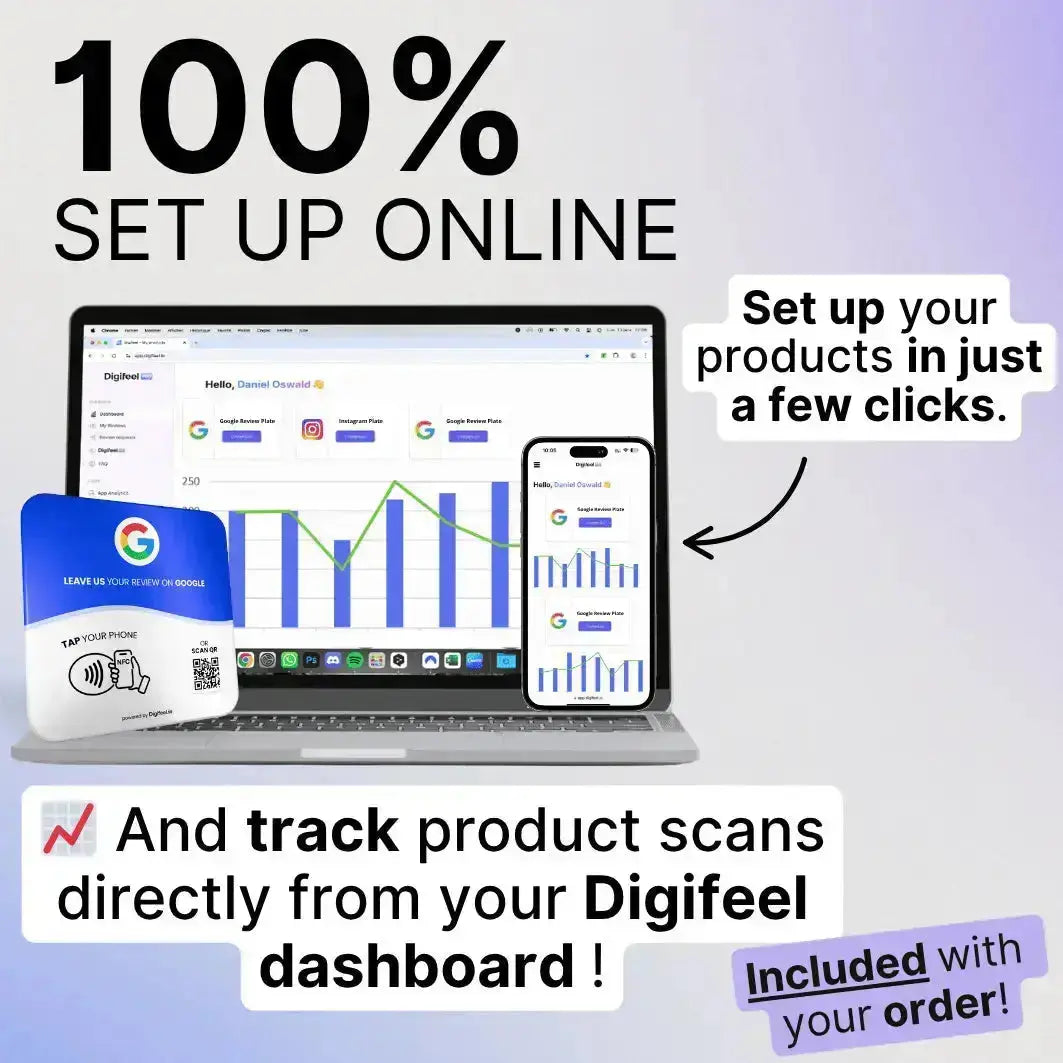
Twenty seconds. When your card arrives, scan the QR code included in the package, open the Digifeel app, enter your unique activation code, and your card is immediately linked to your Google Business profile and ready to collect patient reviews. No technical knowledge, no Google Business configuration, and no ongoing maintenance required.
Do all patient smartphones support NFC?
Every iPhone from the iPhone 7 onwards and virtually every Android device released in the last six years supports NFC natively. In 2026, this covers well over 95% of the smartphones your patients carry. No app download, no settings change, and no special configuration is required on the patient's device. For the small percentage of patients whose devices do not support NFC, the Digifeel card also includes a QR code as an alternative path to your Google review page.
How many new reviews can a medical practice realistically expect per week?
This depends on appointment volume and how consistently the team presents the card at the checkout moment. Practices that brief their entire front-of-house team and make card presentation a standard part of every positive patient farewell typically see between five and twenty new reviews per week depending on their patient throughput. Practices that rely on occasional individual initiative collect significantly fewer.
Should the card be presented by clinical staff or reception staff?
In most medical and dental practices, the reception team handles the checkout interaction and is therefore the most natural and appropriate team to present the Digifeel card. In practices where the clinician has a strong personal relationship with patients and the farewell interaction is genuinely warm, a request from the treating professional can be particularly effective but this should be reserved for interactions where the personal rapport makes the request feel natural rather than procedural.
How does the Digifeel card compare to sending review request emails after appointments?
Follow-up emails arrive when the patient has mentally moved on from their appointment and the motivation to review has significantly faded. They also depend on the patient opening the email, clicking the link, and navigating the review form multiple friction points that compound into a low conversion rate. The Digifeel card captures the review in the moment, at the peak of patient satisfaction, with a single tap that takes less than a second. The conversion rate difference between the two approaches is significant and immediately visible in weekly review volume.
Is the Digifeel card durable enough for a busy medical practice?
The NFC chip embedded in every Digifeel card is a sealed electronic component that is not affected by the cleaning products, handling frequency, or environmental conditions of a busy clinical environment. The card performs identically after hundreds of patient taps as it did on day one making it a one-time investment designed for long-term, consistent use in professional healthcare settings.