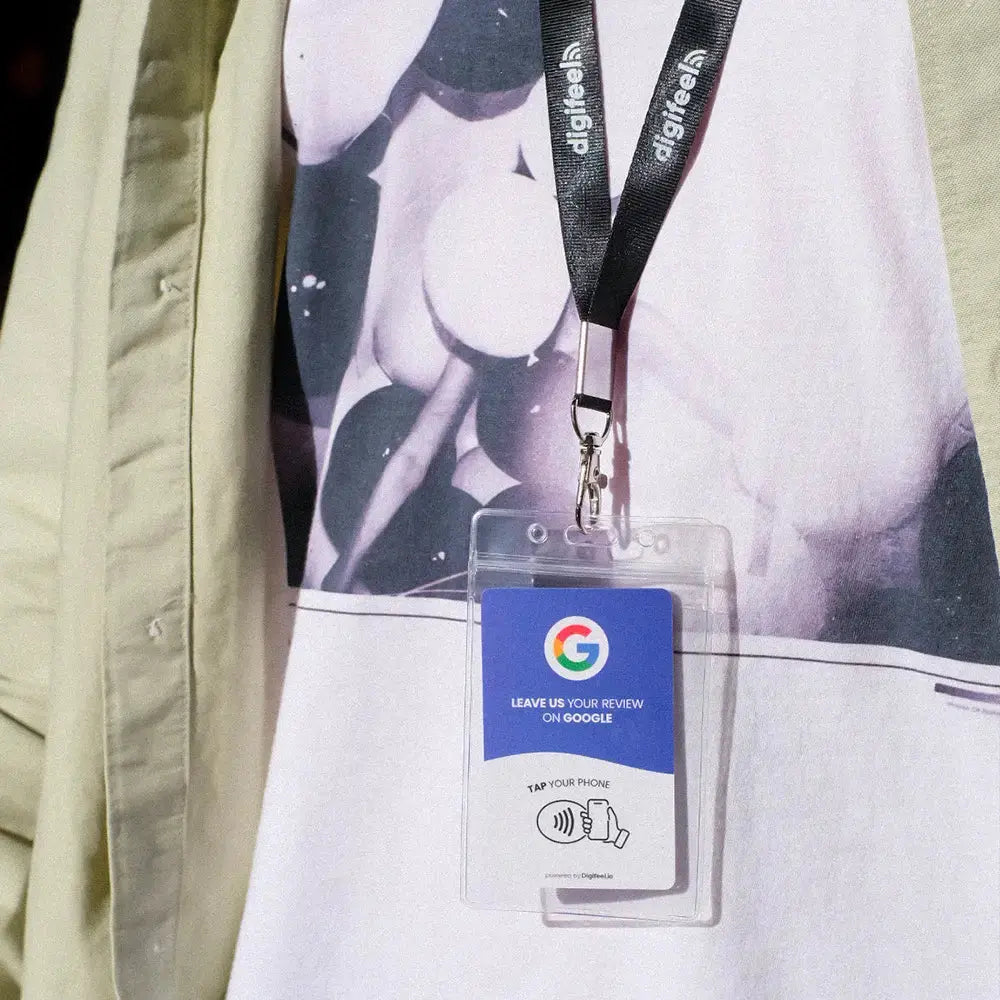
The idea makes sense on the surface. You understand how NFC technology works, you have seen the impact a Google review card can have on a business's online reputation, and you are wondering whether you could simply build one yourself skip the middleman, save some money, and get the same result.
It is a legitimate question. And the honest answer is: technically yes, you can attempt to make your own Google review card. But once you understand what is actually involved in doing it correctly the NFC chip sourcing, the programming, the link configuration, the card design, the print quality, the durability testing, and the ongoing reliability that a customer-facing tool demands the more compelling question becomes: why would you bother?
Building a functional NFC Google review card from scratch requires sourcing programmable NFC chips, a compatible NFC writing app, a device capable of writing to the chip, a card manufacturer willing to produce small quantities at a reasonable cost, and the technical knowledge to configure the link correctly so that it opens your Google review page reliably across every smartphone model your customers might be using. Each of these steps introduces a new opportunity for something to go wrong and a review card that does not work consistently is worse than no review card at all, because it creates friction and embarrassment at the exact moment you are trying to impress a customer.
The reality is that the time, effort, and combined cost of sourcing and assembling a DIY Google review card almost always exceeds the cost of a professionally made one before you have even accounted for the quality gap between a homemade card and a product that has been designed, tested, and refined specifically for customer-facing use in a business environment.
At Digifeel, we have done all of that work for you. One order. Fast delivery. Twenty-second setup. And a card that works perfectly every single time so you can focus on delivering great experiences and collecting the five-star reviews those experiences deserve, rather than spending an afternoon sourcing NFC chips and troubleshooting programming errors.
What Does Making Your Own Google Review Card Actually Involve?
For anyone seriously considering the DIY route, it is worth walking through exactly what building your own NFC Google review card actually requires because the gap between the concept and the execution is significantly wider than most people anticipate before they start.
The first challenge is sourcing the right NFC chips. Not all NFC chips are created equal, and the type of chip you need for a reliable, read-every-time Google review card is more specific than a basic Amazon search will reveal. You need a chip with sufficient memory to store your Google review URL, a read range compatible with the way customers naturally hold their phones, and a form factor small enough to embed cleanly into a card without creating visible bulk or affecting the card's structural integrity. Sourcing these chips in small quantities as a single business owner rather than a large manufacturer typically means paying a significant per-unit premium over what professional card producers pay at scale.
The second challenge is programming the chip correctly. Writing a URL to an NFC chip requires a compatible NFC writing app and a device capable of communicating with the chip format you have sourced. The programming process itself is not extraordinarily complex but getting the link configuration right so that it opens your Google review page directly, rather than redirecting through an intermediary page or failing on certain smartphone models, requires testing across multiple devices and operating systems. A link that works perfectly on your personal iPhone may behave differently on an Android device running a different browser and a review card that works inconsistently is a customer experience liability rather than an asset.
The third challenge is the card itself. An NFC chip embedded in a piece of paper or a standard business card stock will not survive the handling, humidity, and daily use that a customer-facing tool in a busy business environment demands. Professional NFC cards use specific materials and lamination processes that protect the chip and antenna from damage while maintaining the card's appearance over time. Replicating that durability with consumer-grade materials and a home printer is genuinely difficult — and a card that looks unprofessional or stops working after two weeks undermines the credibility of your business at precisely the moment you are trying to build it.
The fourth challenge is time. Between researching chip options, placing orders, waiting for delivery, learning the programming process, testing across devices, designing the card, finding a print vendor willing to produce small quantities, and troubleshooting whatever inevitably goes wrong along the way, a realistic DIY NFC review card project consumes several hours of time and a level of technical patience that most business owners simply do not have available.
When you add up the chip cost, the printing cost, the time investment, and the quality gap between a homemade card and a professionally produced one, the DIY calculation rarely makes financial or practical sense which is exactly why Digifeel exists: to give every business access to a product that works perfectly, looks professional, and arrives ready to use in twenty seconds flat.
Why Digifeel Is the Smarter Alternative to DIY?
Once you understand what building your own NFC Google review card actually involves, the value proposition of Digifeel becomes immediately obvious. But it goes beyond simply saving time and avoiding technical headaches. Choosing Digifeel over a DIY approach means choosing a purpose-built, professionally tested, and immediately deployable solution that delivers better results than anything a business owner could realistically produce on their own at a cost that makes the comparison almost irrelevant.
The product quality difference is significant and immediately visible. Every Digifeel card is designed specifically for customer-facing use in a professional business environment which means the materials, the finish, the durability, and the overall aesthetic have been developed with one audience in mind: your customers. The impression a Digifeel card makes when your team member presents it is clean, modern, and confidence-inspiring. It signals that your business uses professional tools and pays attention to the details of the customer experience. A homemade card however well-intentioned rarely communicates the same level of care and professionalism, and in service industries where first impressions and brand perception are direct revenue drivers, that difference matters.
The reliability of the NFC connection is non-negotiable in a customer-facing context. Every Digifeel card is tested to ensure consistent, reliable performance across the full range of NFC-enabled smartphones your customers are likely to be using — iPhones, Android devices, different operating systems, different browser configurations. A card that fails to trigger on a customer's phone at the peak moment of their experience does not just miss a review opportunity. It creates an awkward interaction that undermines the professional impression your business works hard to build. Digifeel's quality control process exists specifically to eliminate that risk entirely.
The setup experience transforms what could be a technical project into a twenty-second task. With Digifeel, there is no chip sourcing, no programming, no device compatibility testing, and no troubleshooting. Your card arrives with everything already configured linked to your Google Business profile, activated through a simple code entry process, and ready to collect your first review within seconds of opening the package. The hours you would have spent on a DIY project are hours you can invest directly in your business instead.
The cost comparison is less favorable to DIY than most people initially assume. When you account for the per-unit cost of quality NFC chips purchased in small quantities, professional card printing at small run volumes, the time investment of research and programming, and the likely cost of iteration when the first attempt does not work perfectly, the total DIY expenditure frequently approaches or exceeds the cost of a Digifeel card without ever matching its quality, reliability, or professional finish.
The bottom line is straightforward. Digifeel is not just a more convenient alternative to building your own Google review card. It is a fundamentally better product, delivered faster, at a comparable or lower total cost, with zero technical burden on your end. The DIY question answers itself the moment you compare what each approach actually delivers in the real world.