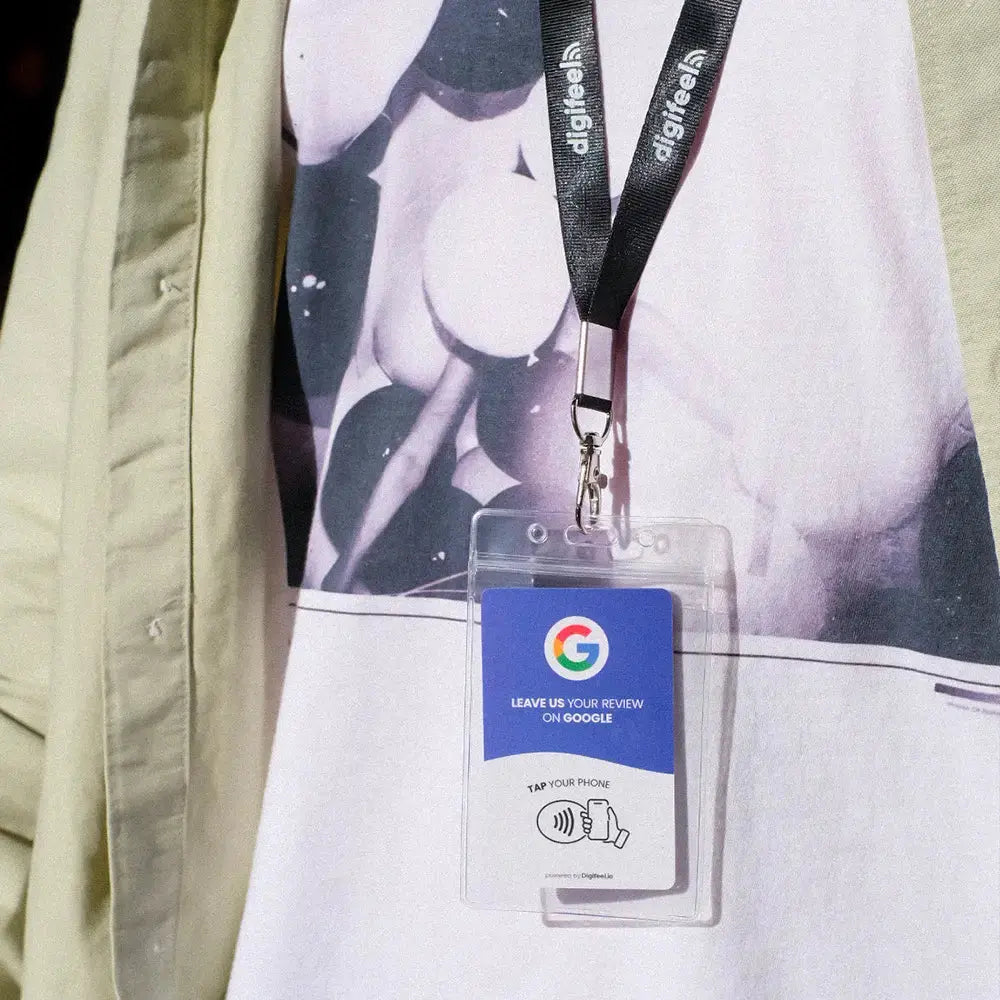
If you have ever invested in a marketing tool that promised results and delivered disappointment, the skepticism behind this question makes complete sense. The ecommerce and local business space in 2026 is full of products that overpromise and underdeliver and it is entirely reasonable to ask whether a small card with an embedded chip is genuinely capable of moving the needle on your Google review count.
The short answer is yes. Google review cards work and the data, the business owner experiences, and the fundamental logic of how they operate all point in the same direction.
But the more useful answer goes deeper than a simple yes. Because the effectiveness of a Google review card is not just about the technology itself. It is about what the technology solves and why that solution produces results that no other review collection method consistently replicates.
The reason most businesses struggle to collect Google reviews is not that their customers are unwilling to leave them. Studies consistently show that the vast majority of satisfied customers would leave a review if the process were simple enough. The problem is friction the gap between intention and action that widens with every additional step a customer has to take. Email follow-ups, QR codes, verbal requests all of these methods ask the customer to remember, to find time, and to navigate a process that requires more effort than the motivation can sustain.
A Google review card and specifically the Digifeel NFC Google Review Card eliminates that friction entirely. One tap. One second. And the customer is on your review page before the motivation has had any chance to fade.
In this article, we break down exactly why Google review cards are effective, what makes the difference between a card that transforms your review strategy and one that collects dust on the counter, and why Digifeel has become the go-to choice for businesses serious about building a five-star reputation in 2026.
Why Most Review Collection Methods Fail: And What Google Review Cards Do Differently?
Understanding why Google review cards outperform every other review collection method starts with understanding why traditional methods consistently underdeliver because the problem is not unique to any one business. It is structural, predictable, and rooted in a single fundamental truth about human behavior: intention without immediate action almost never converts.
Email Follow-Ups Arrive Too Late
Email review requests are the most widely used review collection method in local business and consistently one of the least effective. The logic behind them is sound: reach the customer after their experience, remind them to leave a review, and make it easy with a direct link. The problem is timing.
By the time a follow-up email lands in a customer's inbox typically hours or even days after their interaction with your business the emotional peak of that experience has passed. The satisfaction that would have motivated an enthusiastic five-star review has been diluted by everything else that happened in between. Add to that the reality of overflowing inboxes, aggressive spam filters, and the habitual email-ignoring behavior of the average consumer in 2026, and the conversion rate of email review requests becomes painfully clear. Most go unread. Most of the rest go unacted upon.
QR Codes Create Friction at the Critical Moment
QR codes represented a genuine improvement over purely verbal review requests when they emerged and they still have their place in certain contexts. But as a primary review collection tool in high-frequency customer interaction environments, they consistently fall short.
The process requires the customer to open their camera app, hold their phone at the right angle and distance, wait for the code to register, tap the notification that appears, and then navigate a review form that has just loaded in their browser. In isolation, each of these steps is minor. Combined, at the exact moment when a customer is mentally transitioning out of their interaction with your business, they represent enough cumulative friction to kill the conversion before it ever happens.
The data reflects this. QR code review request conversion rates in real business environments are significantly lower than the tap-to-review conversion rates achieved with NFC technology not because customers are unwilling, but because the process asks too much of them at the wrong moment.
Verbal Requests Depend on Memory
Asking customers verbally to leave a review is better than nothing but it is one of the weakest conversion tools available. A verbal request depends entirely on the customer remembering the request, remembering the business name, finding the Google Business profile independently, and then navigating the review submission process on their own time. Every one of those steps is an opportunity for the intention to dissolve and in practice, the vast majority do.
What the Digifeel Google Review Card Does Differently
The Digifeel NFC Google Review Card does not improve on these methods at the margins. It replaces the friction-heavy process entirely with a single physical gesture that takes less than a second to execute.
When a team member presents the card at the peak moment of customer satisfaction and asks for a tap, the customer does not need to remember anything, navigate anything, or make any additional decisions. Their phone opens the review page instantly. The motivation is still present. The process is essentially invisible. And the review happens.
This combination of precise timing, zero friction, and active personal presentation is what makes NFC Google review cards categorically more effective than every alternative and why businesses that switch to Digifeel consistently report a significant and immediate increase in their weekly review volume from day one.
What Businesses Experience After Using a Google Review Card?
The most honest way to answer this question is not with marketing language it is with the pattern that emerges consistently across every type of business that adopts an NFC Google review card as a standard part of their customer interaction workflow. And that pattern is remarkably consistent regardless of industry, business size, or location.
The first thing most businesses notice is how quickly the results arrive. Unlike SEO campaigns that take months to show traction or advertising strategies that require weeks of optimization before delivering meaningful returns, the impact of an NFC Google review card is visible within days sometimes within hours of the card being activated. The first tap happens, the first review publishes, and the feedback loop between customer satisfaction and online reputation begins working in real time. For business owners who have spent months watching their review count grow by one or two per month, that immediate acceleration is genuinely surprising.
The volume increase that physical businesses experience after adopting a Digifeel card is significant and sustained. Restaurants, salons, retail stores, and service providers that were collecting three to five reviews per month consistently report jumping to fifteen, twenty, or even thirty new reviews per month after integrating the card into their team's customer farewell routine. The technology does not change the quality of the experience it changes the conversion rate between satisfied customers and published reviews. And in businesses with high daily customer volumes, that conversion rate improvement compounds quickly into a review profile that dominates local search results.
This is precisely the dynamic that has made Digifeel the choice of some of the most recognized brands in the physical business world. Burger King is among the major clients that have trusted our NFC review solution to strengthen their Google presence across locations and the choice reflects something important. When a global brand with sophisticated marketing infrastructure and access to every review collection tool available chooses an NFC card solution, it signals that the technology delivers results at a level that more complex approaches cannot match for simplicity, consistency, and scalability across multiple locations.
What enterprise-level clients like Burger King demonstrate is that the effectiveness of NFC review collection scales with business size rather than diminishing. A single-location salon benefits from the same tap-to-review conversion rate as a multi-location quick service restaurant chain. The difference is that at scale, the volume of daily customer interactions means that a consistent card presentation habit generates hundreds of new reviews per month across a network of locations transforming the brand's aggregate Google rating and local search visibility at a speed that no other review strategy can approach.
Beyond review volume, businesses consistently report a measurable improvement in their Google local search ranking after their review count begins growing consistently. This is not coincidental Google's local search algorithm treats review volume, recency, and response rate as direct ranking signals. A business that goes from collecting two reviews per month to collecting twenty is sending a much stronger relevance and activity signal to Google, which translates into higher placement in local search results, more visibility in Google Maps, and a compounding increase in organic customer acquisition over time.
The businesses that extract the most value from their Digifeel card share one common characteristic: they treat card presentation not as an optional add-on but as a standard, non-negotiable part of every positive customer interaction. The technology is consistent. The NFC chip does not have bad days, forget to ask, or feel awkward making the request. The only variable is human consistency and the businesses that solve for that variable with team training and clear process integration are the ones whose review profiles transform fastest.
How to Maximize the Effectiveness of Your Google Review Card in 2026?
Owning a Digifeel NFC Google Review Card gives you the best review collection technology available but the businesses that see the most dramatic results are those that deploy it with intention, consistency, and a clear team strategy. Here is exactly how to extract maximum value from your card from day one.
The single most impactful variable in your review collection performance is when your team presents the card. Timing is everything. The optimal moment is immediately after the peak of the customer experience when satisfaction is highest and the motivation to share it is strongest. Train your team to recognize that specific moment for your business context and to present the card confidently at that precise window every single time. A card presented thirty seconds too late — when the customer is already mentally disengaged converts significantly worse than one presented at the emotional peak of the interaction.
The words you use matter as much as the timing. The most effective presentation combines a personal expression of appreciation with a clear, low-pressure instruction. Something as simple as "We really appreciate your support it only takes a second, just tap your phone here" consistently outperforms vague gestures toward the card. The combination of genuine warmth and a specific physical instruction removes the last remaining hesitation from even the most time-pressed customer.
Make card presentation a non-negotiable standard in your team's customer farewell process not a suggestion, not a reminder, but a fixed step that happens after every positive interaction without exception. The businesses collecting the most reviews with their Digifeel card are not doing anything technically different from those collecting fewer. They have simply made consistent presentation a cultural expectation rather than an individual initiative.
Position your card strategically for passive collection as a complement to active presentation. A Digifeel card placed visibly at your checkout counter, reception desk, or service area captures the proactive customers who notice it and tap spontaneously adding a secondary collection stream that requires zero team effort beyond the initial placement decision.
Finally, respond to every review you receive especially in the early weeks of using your card when your volume is accelerating. Google rewards active profile management with improved local search visibility, and customers who see prompt, thoughtful responses to existing reviews are significantly more likely to leave one themselves. Your response rate is a public trust signal that compounds the impact of every new review your Digifeel card generates.
The card does its job every single time someone taps it. Your job is to make sure that tap happens as often as possible.